To Be a Good Company

English

日本語 中文

Marine Insurance

Marine Insurance

Marine Insurance, also known as Marine Cargo Insurance, primarily covers damage or loss caused to cargo due to natural disasters or accidents during transportation. Generally, Marine Insurance spans marine cargo insurance, marine hull insurance, fishing vessel insurance and liability insurance, etc. Taiwan’s economy primarily relies on international trade. Therefore, there is a high demand for marine cargo insurance primarily to evade the risk arising from the import and export of cargo.

Commercial Fire Insurance

Commercial Fire Insurance

Commercial Fire Insurance provides extensive coverage, not limited to loss caused by the fire per se. It primarily covers damage or injury to buildings (including structure, decoration and fixtures), damage to or loss of equipment (e.g. computers, office furniture and production machinery, etc.), loss of inventory caused by fire, and losses caused by business interruption (e.g. loss of profit, employee salary and temporary venue rental, etc.).

Liability Insurance

Liability Insurance

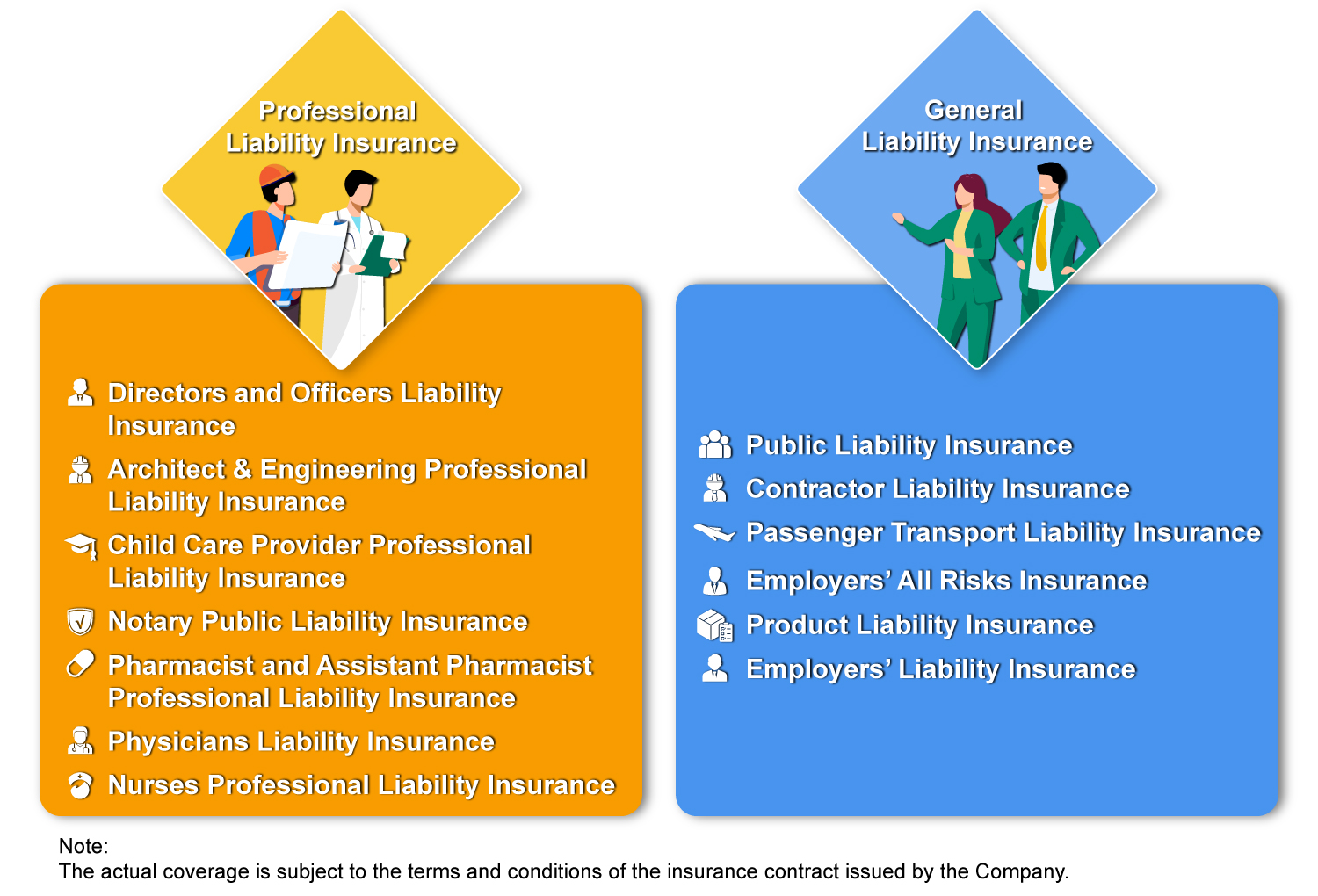
Liability insurance, also called third-party liability insurance, provides protection when the insured is legally responsible for causing injury, death, or property damage to others. If a third party asks the insured to compensate for the above loss, the insurance company should be liable for the claim in accordance to the Policy terms.

For example, if the insured accidentally causes bodily injury, property loss, or other damages due to negligence, and is required by law to provide compensation, the insurance company will indemnify the affected third party within the coverage limits specified in the Policy.
Engineering Insurance

Engineering Insurance

Engineering Insurance refers to a policy that provides financial protection against various risks potentially arising from the construction process, including property loss and liability risks. In simple terms, engineering insurance may cover corresponding claims for losses caused by accidents and natural disasters during the construction, erection or operation of a project, in order to mitigate the contractor’s or owner’s financial burden.